


Blog
What Is the Best Way to Clean Solar Panels?

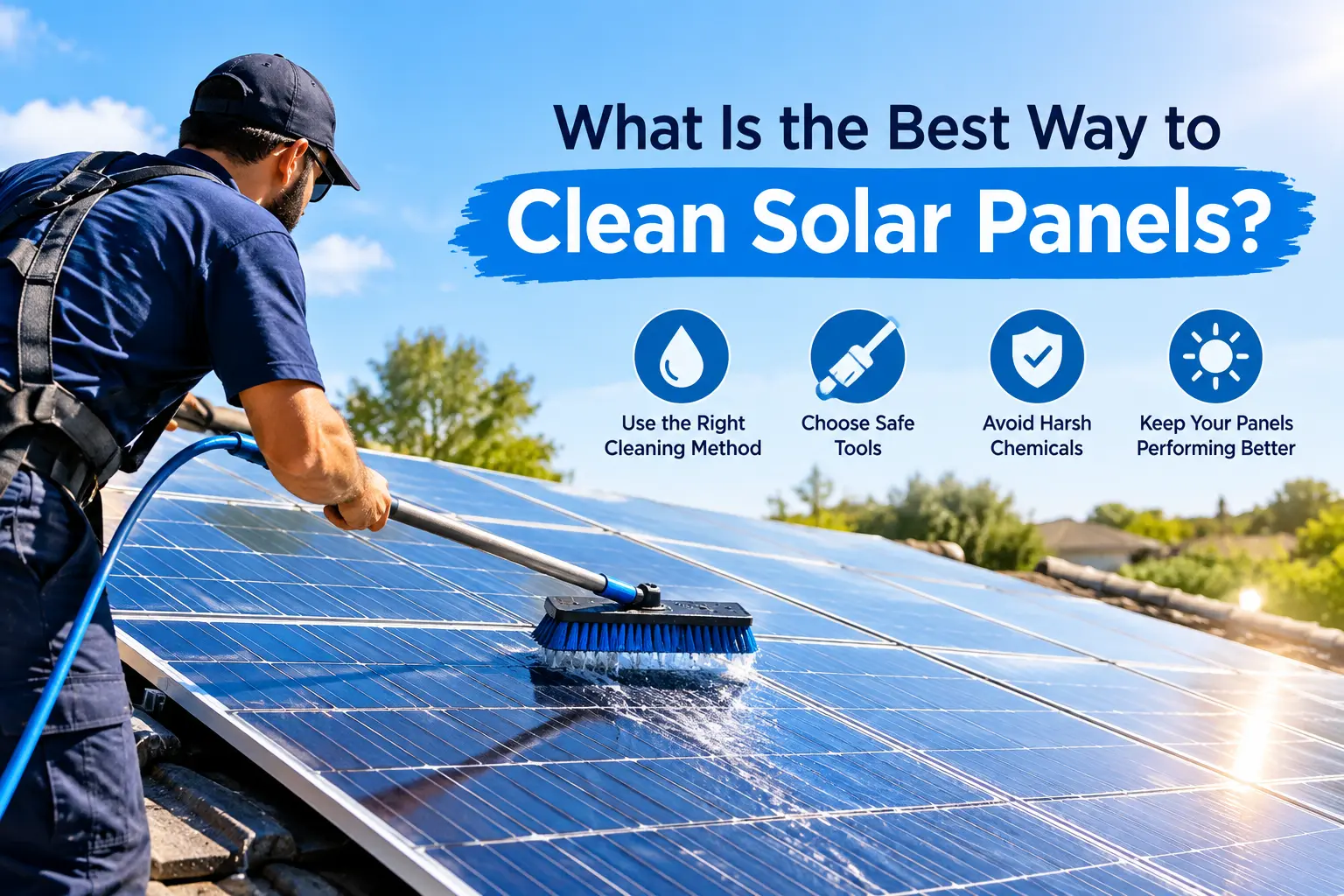
The best way to clean solar panels is to turn the system off according to the manufacturer’s instructions, choose a cool time of day, rinse the panels with clean water, and gently remove dirt using a soft brush or sponge. Avoid abrasive cleaners, harsh chemicals, and high-pressure water. For panels that are difficult or unsafe to access, professional solar panel cleaning services are a safer option.
Solar panels are designed to capture sunlight and convert it into usable electricity, but their performance can be affected when dirt, dust, bird droppings, leaves, and other debris build up on their surface. Regular cleaning helps keep panels exposed to sunlight and can support consistent energy production.
For many Australian homes and businesses, solar panels are installed in areas where they are exposed to harsh weather, airborne dust, pollen and coastal conditions. Although rainfall can wash away some surface dirt, it does not always remove stubborn deposits. This is why knowing the correct way to clean solar panels is important.
So, what is the best way to clean solar panels? The safest approach is generally to use clean water with a soft brush or non-abrasive sponge, preferably when the panels are cool. Avoid harsh chemicals, abrasive materials, and high-pressure cleaning that could damage the panels or their components.
Why Do Solar Panels Need Cleaning?
Solar panels spend most of their working life outdoors. As a result, their surfaces naturally collect different types of debris.
Common contaminants include:
- Dust and dirt
- Bird droppings
- Leaves and small branches
- Pollen
- Mud
- Salt deposits in coastal areas
- Pollution particles
- Tree sap
- Insects and organic debris
A thin layer of dust may not seem significant, but accumulated dirt can reduce the amount of sunlight reaching the photovoltaic cells. Bird droppings can be particularly troublesome because they can create concentrated areas of shading.
Keeping panels reasonably clean allows more sunlight to reach their surface. This can help your system operate efficiently, particularly in locations where dry weather, dust, or environmental pollution causes frequent build-up.
However, cleaning should be approached carefully. Solar panels are electrical equipment, and accessing rooftop installations can also involve significant fall risks.
What Is the Best Time to Clean Solar Panels?
The ideal time to clean solar panels is usually early in the morning or later in the afternoon when the panels are cooler.
Solar panels can become extremely hot during the Australian summer. Applying cool water to very hot glass may create thermal stress, while working on a hot roof can also be uncomfortable and hazardous.
Cleaning during cooler conditions provides several advantages:
- The surface is easier to work with.
- Water is less likely to evaporate immediately.
- Cleaning becomes more comfortable.
- There is less risk of streaking caused by rapid drying.
- You can inspect the panel surface more easily.
An overcast but dry day can also be suitable. The key consideration is to avoid cleaning during extremely hot conditions or when rain, strong winds, or storms create additional safety risks.
How to Clean Solar Panels Step by Step
Cleaning solar panels does not necessarily require complicated equipment. In many situations, basic cleaning tools and careful technique are enough.
1. Check the Manufacturer’s Instructions
Before cleaning, check the instructions provided with your solar panel system.
Different manufacturers may have specific recommendations concerning cleaning methods, detergents, equipment, and system shutdown procedures. Following these instructions can help protect your warranty and prevent accidental damage.
If you cannot find the instructions, check the manufacturer’s documentation or contact an appropriately qualified solar professional.
2. Consider Whether You Can Safely Access the Panels
The biggest issue with rooftop solar cleaning is often not the panels themselves but the roof.
Walking on a roof without appropriate equipment and training can result in serious injury. Sloped roofs, wet surfaces, fragile roofing materials, and rooftop obstacles can all increase the risk.
If your panels are located somewhere that requires climbing onto the roof, consider arranging professional assistance rather than taking unnecessary risks.
Ground-mounted panels or panels that can be safely reached from ground level are generally easier to clean yourself.
3. Turn off the System if Required
Solar panels generate electricity whenever they receive light. Before cleaning, follow the manufacturer’s instructions for safely shutting down the system.
Do not disconnect electrical components or cables yourself unless you are appropriately qualified to do so. If you are unsure about the shutdown procedure, consult a qualified solar installer or electrician.
4. Remove Loose Debris
Start by removing loose leaves, twigs, and other debris.
A soft brush can be useful, but avoid scraping the surface. Large pieces of debris should be removed gently rather than dragged across the glass.
If leaves have collected around the edges of the panels, remove them carefully without disturbing cables, mounts, or other electrical components.
5. Rinse with Clean Water
Use clean water to rinse away loose dust and dirt.
A garden hose with gentle water flow may be sufficient for accessible panels. Avoid using excessively high water pressure.
The purpose of the first rinse is to loosen surface contamination before any brushing takes place.
6. Use a Soft Brush or Sponge
For more stubborn dirt, use a soft, non-abrasive brush or sponge.
Gently move across the panel surface rather than applying heavy pressure. A brush with a long handle can be useful for panels that are safely reachable from the ground.
Never use abrasive scouring pads, rough brushes, or anything that could scratch the glass.
7. Use a Mild Cleaning Solution Only When Necessary
Plain water is often enough for light dirt.
If the manufacturer permits a cleaning solution, use a mild, non-abrasive product suitable for solar panels. Avoid strong household chemicals, solvents, abrasive detergents, and products that leave a heavy residue.
Using too much cleaning product can actually create another problem. A residue left behind on the panel can attract additional dirt and reduce surface clarity.
8. Rinse Thoroughly
After cleaning, rinse the panels thoroughly with clean water.
This removes loosened dirt and any approved cleaning solution remaining on the surface.
If your local water supply contains a high level of minerals, dried water spots may become visible after cleaning. In these circumstances, suitable purified or demineralised water may help minimise mineral deposits, depending on the manufacturer’s recommendations.
9. Allow the Panels to Dry
In many cases, you can allow the panels to air dry.
If drying is necessary, use a clean, soft and non-abrasive material. Do not rub aggressively across the glass.
Once the panels are dry, check them for remaining dirt, streaks, bird droppings, or other deposits.
Can You Clean Solar Panels With a Garden Hose?
A garden hose can be suitable for rinsing solar panels when used carefully.
The important point is water pressure. A gentle flow is generally preferable to a powerful jet. High-pressure water can potentially damage seals, connections, or other components if directed incorrectly.
A hose is particularly useful for removing loose dust before using a soft brush.
If the panels are located on a roof, however, using a hose does not remove the safety risk of accessing the roof. In that situation, professional cleaning may be more appropriate.
Should You Use Soap to Clean Solar Panels?
You do not necessarily need soap to clean solar panels.
For ordinary dust and loose dirt, clean water and a soft brush may be sufficient. If a cleaning solution is needed for stubborn contamination, follow the panel manufacturer’s recommendations.
Avoid assuming that a standard household cleaning product is safe for solar panels. Some products contain chemicals or additives that can leave residues or affect surface coatings.
The simplest approach is often the safest: use clean water and gentle mechanical cleaning unless additional treatment is specifically recommended.
Can You Use a Pressure Washer on Solar Panels?
Pressure washing solar panels is generally not recommended unless the manufacturer specifically approves the equipment and method.
High-pressure water can potentially affect seals, frames, wiring connections, and other parts of the solar installation. It can also force water into areas where it should not enter.
A gentle water flow is normally a better option for routine surface cleaning.
If heavy contamination cannot be removed safely with ordinary methods, professional equipment and experience may be preferable to experimenting with a pressure washer.
What Should You Avoid When Cleaning Solar Panels?
Knowing what not to do is just as important as knowing how to clean the panels.
Avoid:
- Abrasive sponges
- Rough brushes
- Harsh chemicals
- Strong solvents
- Excessive water pressure
- Scraping tools
- Walking directly on panels
- Cleaning during extreme heat
- Pouring large amounts of water near electrical connections
- Attempting electrical repairs during cleaning
Solar panels are built to withstand outdoor conditions, but they still require appropriate care.
How Often Should Solar Panels Be Cleaned?
There is no single cleaning schedule that works for every solar system.
The ideal frequency depends on your location, weather conditions, surrounding environment, panel angle, and the amount of contamination they receive.
A home surrounded by trees may experience more leaf and pollen accumulation than a property in an open area. A coastal property may experience salt deposits, while a dry area may collect considerable dust.
Instead of automatically cleaning panels every few weeks, inspect them periodically.
You may need more frequent cleaning if you notice:
- Heavy dust accumulation
- Bird droppings
- Tree sap
- Leaves covering the panels
- Visible stains
- Significant environmental debris
- A noticeable decline in system performance
Regular visual inspections can help you determine when cleaning is actually necessary.
Solar Panel Maintenance in Australian Conditions
Australia’s varied climate means solar panels can face very different environmental conditions.
In dry regions, dust can accumulate quickly. In coastal locations, airborne salt can settle on outdoor surfaces. Areas with frequent storms may receive leaves, branches, and other debris.
This makes routine inspection an important part of Solar Panel Maintenance Perth, particularly where environmental conditions contribute to regular surface contamination.
Maintenance should not only focus on cleaning. It can also involve checking for visible damage, monitoring energy production, and arranging professional inspections when problems appear.
Does Rain Clean Solar Panels?
Rain can remove some loose dust from solar panels, but it should not be considered a complete cleaning method.
Light rain may wash away surface dirt, while heavier rainfall can remove larger amounts of loose contamination. However, rain may not eliminate bird droppings, oily deposits, tree sap, or mineral marks.
In some circumstances, rainfall can even leave water spots behind after the water evaporates.
If you can see substantial dirt remaining after rainfall, manual or professional cleaning may still be necessary.
How Does Dirt Affect Solar Panel Performance?
Solar panels need sunlight to generate electricity. Anything that significantly obstructs sunlight can potentially affect their output.
A small amount of ordinary dust may have a limited effect, while heavier contamination can create more noticeable shading.
Bird droppings are particularly important because a small concentrated patch can cover part of several photovoltaic cells. If contamination becomes widespread, the overall effect can become more significant.
Cleaning is therefore one component of keeping a solar system operating as intended. However, reduced energy production can have many causes, including equipment faults, shading changes, inverter issues, and system degradation.
If your solar output drops unexpectedly, cleaning the panels should not be assumed to be the only solution.
When Should You Hire Professional Solar Panel Cleaners?
Professional cleaning can make sense when panels are difficult to access or when there is heavy contamination.
You may want professional help if:
- Panels are installed on a steep roof.
- The roof is high or difficult to access.
- You are uncomfortable working at height.
- There are extensive bird droppings.
- Panels have stubborn deposits.
- The system is part of a larger commercial installation.
- You cannot safely reach the panels from ground level.
- You are unsure how to safely shut down the system.
Professional cleaners can use appropriate equipment and cleaning techniques while reducing the need for homeowners to take unnecessary risks.
For property owners looking for Solar Panel Cleaning Services, it is worth checking that the provider understands solar equipment and follows appropriate safety practices rather than treating panels like ordinary glass surfaces.
Solar Panel Cleaning in Perth
Perth’s outdoor environment can expose solar panels to dust, dry weather, bird droppings, and other forms of debris. Regular inspection can help property owners determine whether their panels require attention.
For people searching for Solar Panel Cleaning Perth, the main consideration should not simply be how quickly the panels can be washed. Safe access, suitable equipment and a panel-friendly cleaning method are equally important.
The best cleaning approach depends on the condition and accessibility of your solar installation. A simple ground-level rinse may be enough for lightly dusty panels, while heavily contaminated or difficult-to-access systems may require professional attention.
Common Mistakes People Make When Cleaning Solar Panels
Some cleaning mistakes can cause more problems than the original dirt.
Cleaning During the Hottest Part of the Day
Hot panels can cause water to evaporate quickly, potentially leaving marks and making cleaning less effective.
Using Abrasive Materials
Scratching the panel surface can permanently affect its appearance and potentially its performance.
Applying Too Much Pressure
Aggressive brushing is unnecessary and may damage the surface or components.
Using Unapproved Chemicals
A household cleaning chemical may not be suitable for photovoltaic panels.
Ignoring Roof Safety
A clean panel is not worth risking a serious fall. Safe access should always come first.
Forgetting to Inspect the System
Cleaning is a good opportunity to notice visible cracks, damaged frames, loose components, or unusual debris. However, electrical repairs should be left to appropriately qualified professionals.
Can Dirty Solar Panels Cause Long-Term Problems?
Dirt itself is not necessarily going to damage every solar panel, but certain types of contamination can create ongoing issues if left untreated.
Bird droppings, for example, can become difficult to remove once they dry and harden. Organic material may also encourage further debris to collect.
Heavy contamination can reduce sunlight exposure, while neglected surrounding vegetation can create additional shading.
Regular inspections allow these problems to be identified before they become more difficult to manage.
Is Professional Solar Cleaning Worth It?
Whether professional cleaning is worthwhile depends on your property’s circumstances.
If your panels are easily accessible from the ground and only have light dust, a careful rinse and gentle cleaning may be all that is required.
On the other hand, professional cleaning can provide a practical solution when panels are installed on high or steep roofs. The safety benefits alone may make professional assistance worthwhile.
A professional approach can also be useful for larger solar installations where cleaning a large number of panels would otherwise take considerable time.
Perth Gutters Cleaning also highlights the broader importance of maintaining exterior surfaces around a property, although solar panels require their own appropriate cleaning techniques and safety considerations.
How to Keep Solar Panels Cleaner for Longer
You cannot completely prevent outdoor solar panels from becoming dirty, but you can reduce the amount of contamination they receive.
Keep nearby trees properly maintained where appropriate, particularly if branches or leaves regularly fall onto the panels.
Check for bird activity if droppings are becoming a recurring issue. Do not attempt to disturb protected wildlife or nests without appropriate advice.
You should also monitor the system’s electricity production. A significant unexplained change in output may indicate that the panels need cleaning or that another part of the system requires attention.
Regular visual inspections can help you identify problems before they become more difficult to resolve.
Final Thoughts
The best way to clean solar panels is to keep the process simple, gentle, and safe. Clean water, a soft brush or sponge, and careful handling are usually preferable to harsh chemicals, abrasive tools, or high-pressure equipment.
Always consider the manufacturer’s cleaning recommendations before starting. If the panels are installed on a roof that is difficult or dangerous to access, professional assistance is generally the safer choice.
Solar panel cleaning is only one part of proper system care. Regular inspections, performance monitoring, and professional servicing when required can help you get reliable long-term use from your solar investment.
Frequently Asked Questions
1. What is the best thing to use to clean solar panels?
Clean water and a soft, non-abrasive brush or sponge are generally suitable for removing ordinary dust and dirt. Follow the manufacturer’s instructions before using any cleaning solution.
2. Can I clean solar panels with tap water?
Yes, tap water can be suitable for basic cleaning, provided it is used gently. However, water with a high mineral content may leave deposits when it dries so that purified water may be preferable in some circumstances.
3. Is it OK to pressure wash solar panels?
Pressure washing is generally not recommended unless specifically approved by the manufacturer. High-pressure water may damage seals, connections, or other components.
4. How often should solar panels be cleaned in Australia?
Cleaning frequency depends on local conditions. Panels exposed to heavy dust, bird droppings, pollen, leaves or coastal salt may require more frequent cleaning than panels in cleaner environments.
5. Does cleaning solar panels make a big difference?
Cleaning can help remove substances that block sunlight from reaching the photovoltaic cells. The effect varies depending on how dirty the panels were and the environmental conditions around the property.
6. Can I clean solar panels myself?
You can clean panels yourself when they are safely accessible, and the manufacturer permits it. If cleaning requires climbing onto a roof, professional assistance may be the safer option.
7. What time of day is best for cleaning solar panels?
Early morning or late afternoon is generally preferable because panels are cooler. Avoid cleaning during the hottest part of the day, particularly in Australia’s warmer conditions.


